Mishkin’s Financial Markets and Institutions: Understanding the Global Banking System
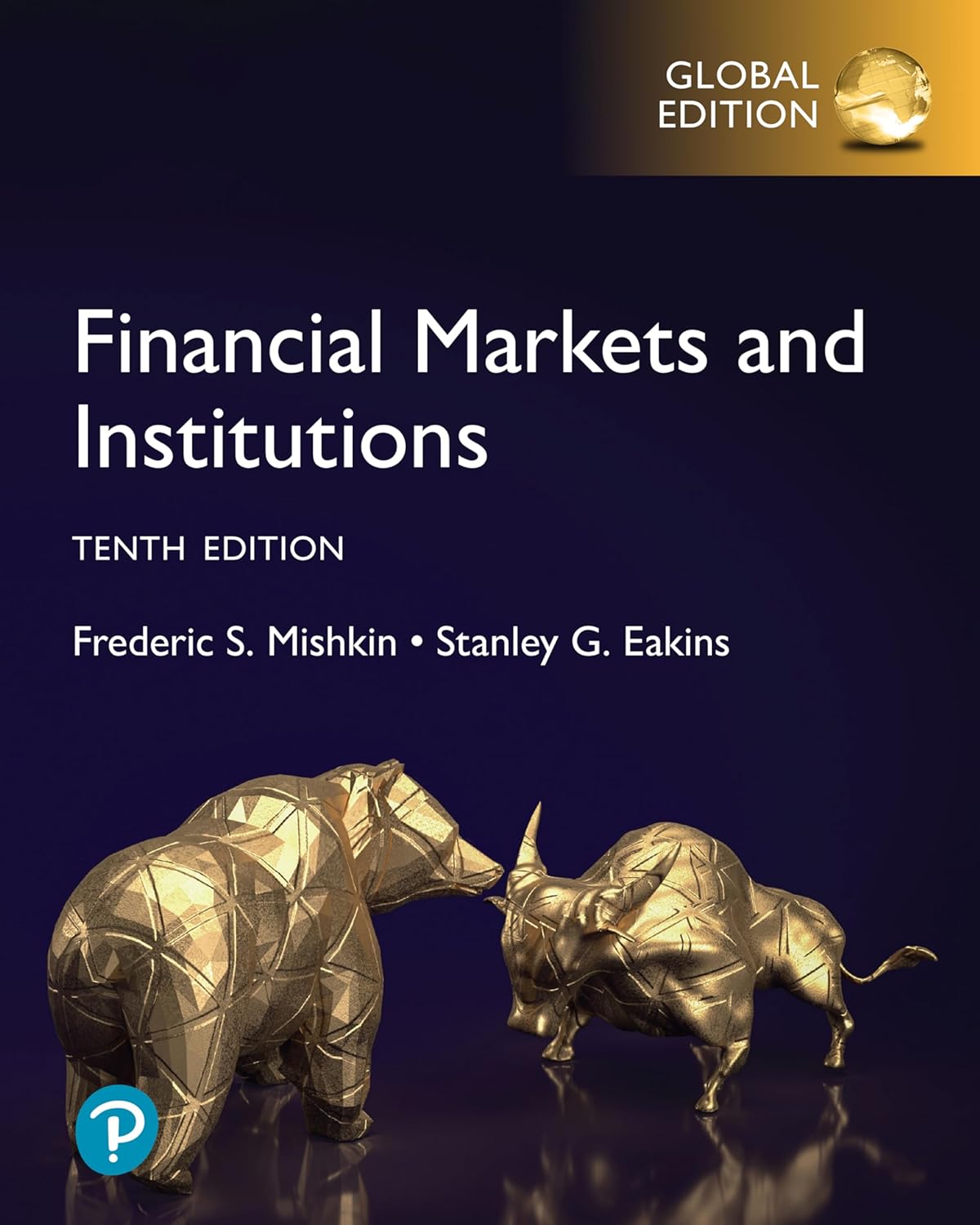
Why Is This Book Essential for Understanding Modern Finance?
Every day, trillions of dollars move through banks, stock exchanges, bond markets, and payment systems.
When these systems operate smoothly, businesses obtain financing, governments raise capital, families secure loans, and investors build wealth.
When they fail, however, the consequences can trigger recessions, banking crises, inflation, or even global financial instability.
Financial Markets and Institutions explains how these interconnected systems function and why understanding them is essential for anyone pursuing a career in finance, banking, economics, or public policy.
Who Is Frederic S. Mishkin?
Frederic S. Mishkin is one of the world's leading monetary economists and banking experts.
He served as a Governor of the U.S. Federal Reserve System, giving him firsthand experience in shaping monetary policy and responding to financial crises.
His academic work combines rigorous economic theory with practical insights from central banking, making his textbooks trusted references across universities and financial institutions worldwide.
What Will You Learn?
| Topic | Practical Importance |
|---|---|
| Financial Markets | Understand how money flows between investors and businesses. |
| Commercial Banking | Learn how banks create credit and manage deposits. |
| Central Banking | Understand how central banks influence inflation and economic growth. |
| Interest Rates | Discover how borrowing costs affect consumers and businesses. |
| Monetary Policy | Explore how governments stabilize economies. |
| Financial Regulation | Understand why financial institutions require oversight. |
| Financial Crises | Analyze why banking systems collapse and how crises spread globally. |
How Do Financial Markets Support Economic Growth?
Financial markets perform one of the economy's most important functions: they efficiently allocate capital.
Individuals with savings invest their money through banks, mutual funds, bonds, or stock markets. Businesses and governments then use this capital to expand operations, build infrastructure, create jobs, and develop new technologies.
Without efficient financial markets, economic growth would slow dramatically because productive investments would struggle to obtain funding.
Understanding the Banking System
One of the book's greatest strengths is its detailed explanation of modern banking.
Readers learn how banks accept deposits, create loans, manage liquidity, assess credit risk, and generate profits while operating under strict regulatory frameworks.
The book also explains why maintaining public confidence is essential for preventing bank runs and preserving financial stability.
The Role of Central Banks
Central banks influence nearly every aspect of the economy.
Using tools such as Interest Rate Policy, Open Market Operations, Reserve Requirements, and Quantitative Easing, they attempt to balance inflation, employment, and economic growth.
Mishkin explains these complex mechanisms in a logical and accessible manner, making monetary policy easier to understand for both students and professionals.
Learning from Financial Crises
The global financial system has experienced numerous crises, including banking failures, sovereign debt crises, and market crashes.
Rather than simply describing historical events, the book explains the economic mechanisms behind financial instability and the policy responses designed to restore confidence.
These lessons remain highly relevant in today's interconnected financial environment.
Who Should Read This Book?
- MBA Finance Students
- Economics Students
- Banking Professionals
- CFA Candidates
- Central Bank Researchers
- Investment Analysts
- Financial Regulators
- Public Policy Students
- Anyone interested in understanding the global financial system
Why Does It Remain Relevant in ?
Today's financial landscape includes digital banking, fintech innovation, central bank digital currencies (CBDCs), artificial intelligence, cryptocurrency markets, and rapidly evolving financial regulations.
Despite these technological changes, the underlying principles governing financial institutions, monetary policy, banking stability, and financial intermediation remain fundamentally the same.
Mishkin's framework continues to help readers understand both traditional finance and emerging developments.
What Makes This Book Different?
Unlike many finance textbooks that focus exclusively on investments or corporate finance, this book examines the financial system as a whole.
It connects banks, central banks, securities markets, insurance companies, regulators, and international financial institutions into one coherent framework.
This systems-level perspective enables readers to understand how financial decisions made in one sector can influence the entire economy.
What Readers Appreciate About This Book
- Clear explanations of complex financial systems.
- Excellent coverage of banking, monetary policy, and financial institutions.
- Strong integration of economic theory with practical financial applications.
- Numerous real-world examples and historical case studies.
- Widely adopted by universities and business schools across the world.
- Provides an outstanding foundation for careers in banking, finance, economics, and public policy.
Conclusion
Financial Markets and Institutions by Frederic S. Mishkin remains one of the definitive books for understanding how the global financial system operates. Covering Commercial Banking, Central Banking, Financial Markets, Monetary Policy, Interest Rates, and Financial Crises, it equips readers with the knowledge required to analyze modern financial systems with confidence. Whether you aspire to work in banking, investment management, financial regulation, or economic policy, Mishkin's timeless work offers an indispensable foundation for understanding the institutions that drive the global economy.


0 Comments