Read Deep Work Before It’s Too Late — This Book Will Save Your Focus
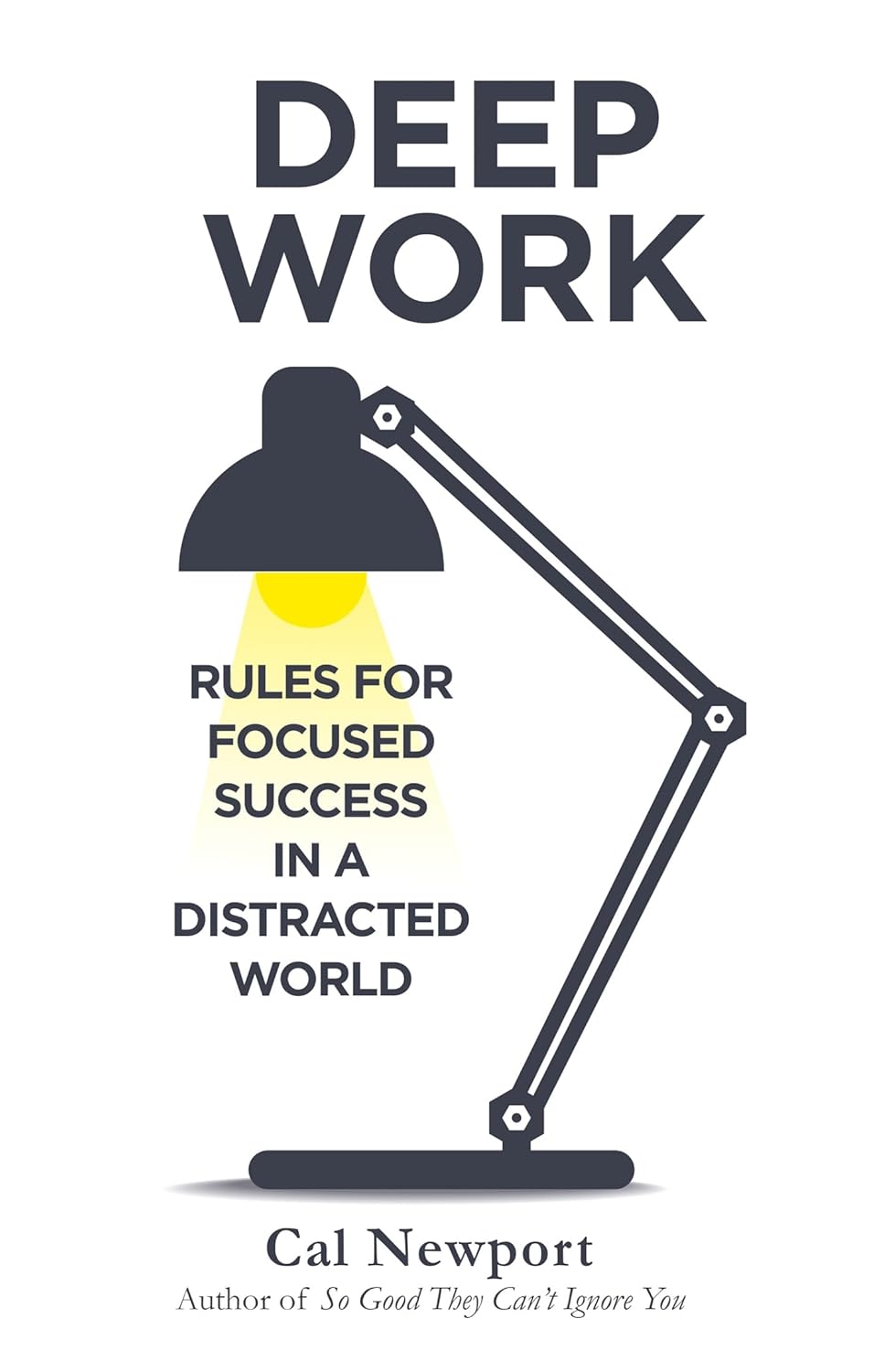
Cal Newport’s Deep Work is more
than a productivity book — it is an emergency warning.
In a world drowning in notifications, multitasking, and digital noise, Newport
delivers a clear message:
If you don’t protect your focus, you
will lose it.
Not over decades.
Not over years.
But slowly, silently — every single day.
This book isn’t just about working
harder.
It’s about reclaiming the ability to think deeply, learn fast, and produce work
that actually matters.
 |
| This Book Will Save Your Focus |
1. Why Deep Work Is the Most Important Skill of the 21st Century
We live in an economy where distractions
are engineered to be addictive.
Focus is now a competitive advantage.
Newport argues that deep work — the ability to concentrate without distraction — is:
- rare
- valuable
- irreplaceable
The people who master this one skill dominate their fields, earn more, and create work with long-term impact.
2. The Core Idea: Your Brain Is Being Rewired for Shallow Thinking
Most people spend their day in:
- email loops
- mindless scrolling
- rapid task switching
- fake productivity
This destroys an ability humans once had naturally — deep concentration.
Deep Work
exposes the hidden danger:
Every time you shift your attention, you leave “attention residue” that weakens
your cognitive power for minutes afterward.
The result?
You lose clarity.
You lose creativity.
You lose mental stamina.
3. The Book Teaches You How to Rebuild Your Focus Like a Muscle
Focus isn’t a gift — it’s a skill you train.
Cal Newport gives practical, science-based strategies, including:
✅
Schedule deep work hours
✅ Eliminate digital noise
✅ Use rituals to enter flow state
✅ Work in distraction-proof
environments
✅ Train your mind to resist urges
These habits gradually strengthen your cognitive endurance.
4. The Four Rules of Deep Work
Newport simplifies the practice into four fundamental principles:
1. Work Deeply
Use routines, rituals, and time blocks to create long periods of uninterrupted concentration.
2. Embrace Boredom
Your brain must relearn how to sit in silence without seeking stimulation.
3. Quit Social Media
Not entirely — but strategically.
Keep only the platforms that genuinely benefit your life.
4. Drain the Shallows
Shallow work (emails, meetings, admin tasks) must be minimized or batched to protect your deep work hours.
5. Why This Book Is a Warning, Not Just Advice
Newport explains something most people miss:
Your ability to focus is disappearing faster than you realize.
If you don’t consciously fight for deep work:
- algorithms will consume your attention
- constant notifications will fragment your mind
- your output will weaken
- your creativity will decay
- your goals will remain blurry
This decline is invisible day-to-day…
but devastating over years.
6. Deep Work = More Success in Less Time
One of the book’s most powerful insights:
You don’t need more hours. You need more depth.
Deep work allows you to:
- produce faster
- learn complex things quicker
- solve problems creatively
- build expertise in your field
- stand out in a crowded world
Most people rely on speed.
Deep workers rely on quality.
And quality always wins.
7. The Hidden Promise of the Book: A Quieter, More Meaningful Life
Mastering deep work doesn’t just
improve productivity —
it rebuilds your entire life approach.
You experience:
- calmer days
- clearer thinking
- reduced stress
- meaningful progress
- stronger self-discipline
You stop reacting to chaos and start designing your life intentionally.
Read This Book Before the World Steals Your Focus Forever
Deep Work isn’t a trend — it’s a survival manual for your mind.
In a world built on distraction,
your focus is your greatest form of wealth.
This book teaches you how to protect it, sharpen it, and use it to create a life that actually matters.
Read Deep Work today —
because your attention is running out faster than you think.


0 Comments